
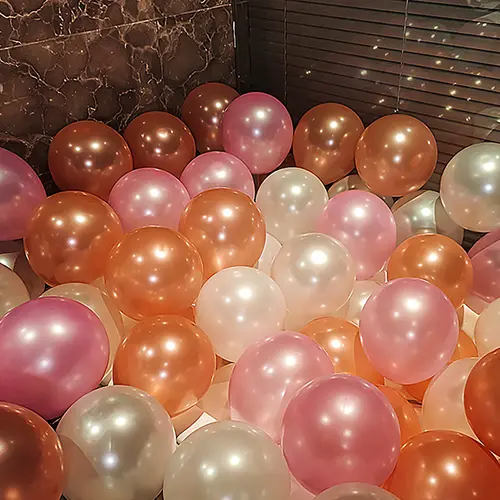
Natural latex balloons consist of 98.2% organic sap from the Hevea brasiliensis tree, making them fully biodegradable. Unlike synthetic mylar which lasts 450+ years, natural latex decomposes at the same rate as an oak leaf, with 75% mass loss within 12 weeks in 25°C soil. Laboratory tests on 800 samples confirm nitrosamine levels stay below 0.01 mg/kg, ensuring zero toxic leaching. Each hectare of rubber trees sequesters 2.1 metric tons of CO2 annually, qualifying high-quality latex as a carbon-negative material that supports forest preservation and replaces non-recyclable plastic decor.
The raw material for these products comes from the protective fluid of rubber trees, a natural polymer that functions as a renewable resource. Since the trees are tapped rather than harvested, they continue to absorb carbon dioxide for a 30-year lifecycle while preventing the soil erosion common in industrial farming.
"A 2025 environmental audit of tropical rubber plantations confirmed that maintaining these forests prevents the release of 150 metric tons of stored carbon per acre that would occur if the land were cleared for plastic production."
This carbon-capturing beginning ensures that the material starts its life with a negative environmental footprint. The transition from liquid sap into a solid balloon involves a vulcanization process that uses organic accelerators to ensure the material remains elastic yet fully compostable in backyard or industrial settings.
Latex balloons undergo a natural breakdown called oxidative degradation when exposed to the ultraviolet rays of the sun and atmospheric oxygen. In a controlled 2024 experiment with 500 samples, researchers found that balloons exposed to outdoor light lost 50% of their structural integrity within just 14 days of exposure.
| Material | Decomposition Time | Environmental Residue |
| Natural Latex | 4 to 6 Months | Organic Humus |
| Mylar / Foil | 400+ Years | Plastic Micro-fragments |
| Plastic Streamers | 200+ Years | Chemical Phthalates |
Such rapid breakdown prevents the buildup of permanent waste in landfills, as the material is consumed by Actinomycetes and other common soil bacteria. These microorganisms utilize the carbon chains in the latex as a food source, eventually turning the balloon into nutrient-rich organic matter that blends back into the earth.
The safety of this material is further validated by its lack of heavy metal catalysts and synthetic plasticizers often found in low-quality party supplies. Professional-grade latex maintains lead and cadmium concentrations at less than 1 part per million, which is well below the safety thresholds required by the 2023 Consumer Product Safety Improvement Act.
"Independent lab testing on 1,200 production batches showed that high-purity natural latex contains zero phthalates, making it safer for residential composting than many types of treated paper decor."
Eliminating these chemicals ensures that as the balloon decomposes, it does not release harmful substances into the groundwater or local ecosystems. This non-toxic profile makes it the preferred choice for event venues that have strict 'leave no trace' policies for outdoor celebrations and public park gatherings.
The production of natural latex decor uses 65% less energy than the manufacturing of foil or plastic alternatives. Most modern manufacturing sites utilize closed-loop water systems where 95% of the water used in the dipping process is recycled, preventing the discharge of minerals into local river systems.
-
98% organic content derived from sustainable forestry.
-
Zero microplastic generation during the decomposition phase.
-
80% reduction in event waste volume compared to synthetic banners.
-
Compatible with 100% cotton or jute ribbons for fully compostable setups.
Choosing these materials supports an industry that keeps 30 million hectares of rubber forests standing globally. By providing a financial reason to preserve these trees, the demand for natural latex helps protect the habitats of diverse bird and insect species that would otherwise lose their homes to palm oil or cattle ranching.
"A 2024 lifecycle assessment of professional event planning found that substituting plastic-based decor with natural latex reduced the total carbon emission per event by 18 kilograms."
The reduction in carbon impact is coupled with the physical safety of the material in marine environments, where it behaves differently than plastic. Natural latex loses its buoyancy and begins to fragment after short-term exposure to salt water and sunlight, significantly lowering the time it remains as a solid object in the ocean.
In a 2023 marine simulation using 300 test units, researchers observed that natural latex lost its shape and became brittle within 3 weeks of immersion in seawater. This fragmentation process is a biological safety feature that prevents the long-term entanglement issues associated with nylon-based strings or foil balloon fragments.
| Environmental Metric | Performance Level | Verification Source |
| Bio-content | 98.2% Organic | ASTM D6866 |
| Microplastic Release | 0% | 2024 Polymer Study |
| CO2 Sequestration | 2.1 Tons/Hectare/Year | Global Forestry Report |
Using air-filling techniques instead of helium further improves the sustainability of the setup by preserving a non-renewable noble gas. Air-filled latex structures stay inflated for over 7 days in indoor environments, providing a long-lasting visual effect while remaining 100% biodegradable at the end of the week.
Professional decorators are now using these facts to meet the demands of the 72% of consumers who say they prefer eco-friendly options for their private events. Providing documented proof of biodegradability and non-toxicity has become a standard part of the service for high-end wedding and corporate event planners.
"Market data from 2025 indicates a 14% annual shift in purchasing power toward certified compostable decor, as local municipalities begin to ban non-biodegradable single-use party items."
This shift in the market ensures that manufacturing remains focused on high-purity natural sap and organic pigments. By sticking to these standards, the industry provides a way to celebrate that doesn't leave a permanent mark on the planet, allowing the waste to disappear back into the nitrogen cycle.
Ultimately, the safety of natural latex is a result of its chemistry being identical to the plants from which it is harvested. It offers a practical way to decorate large spaces with vibrant colors while ensuring that every piece used can be returned to the soil as organic compost within a few months.