
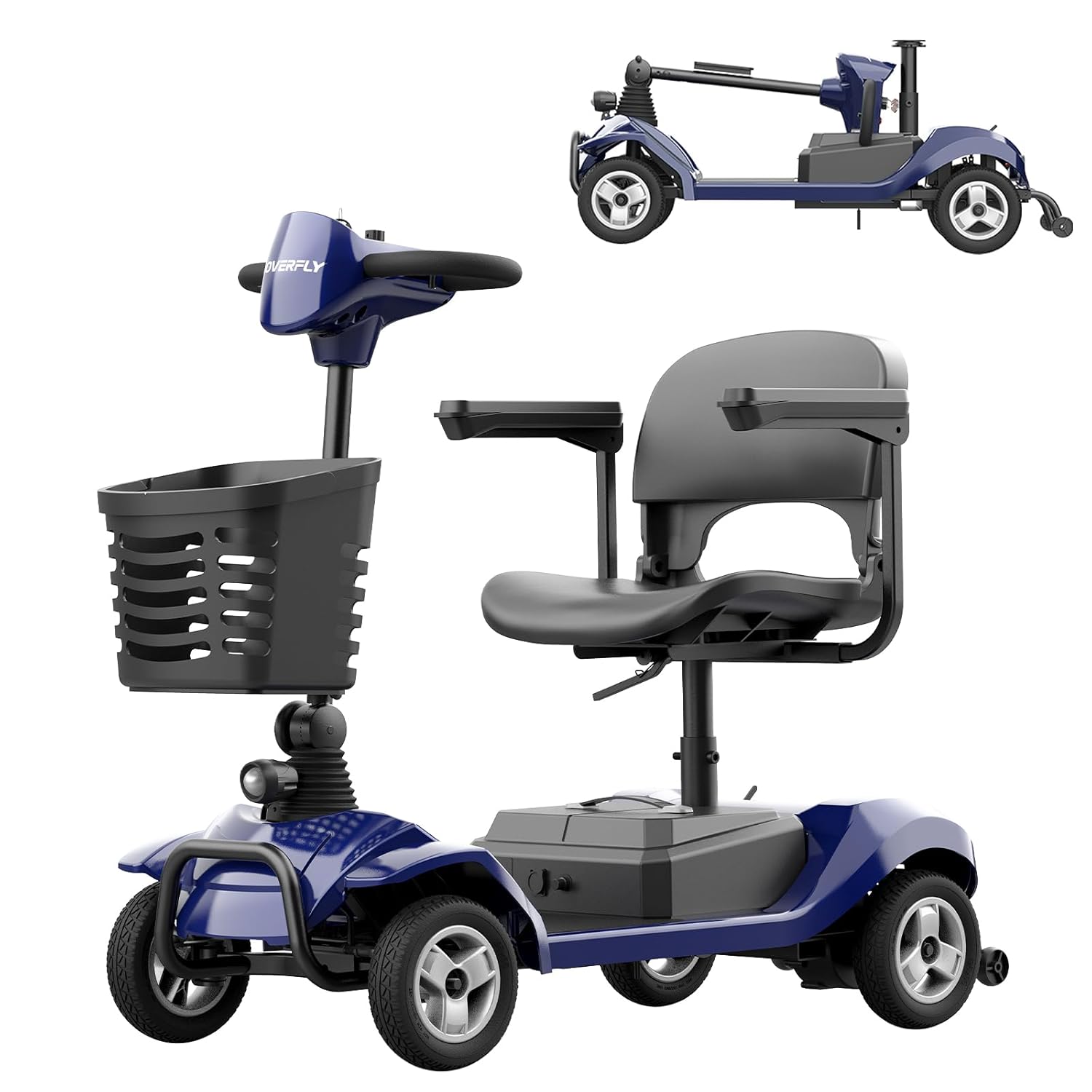
 Furthermore, independent mobility directly enhances seniors' social participation and economic autonomy. Market research shows that seniors who own personal electric mobility scooters spend an average of $120 more per month on local consumption (such as at cafes, barbershops, and markets), contributing significant traffic to community businesses. A prime example is the "Silver Mobility Revolution" program in Tokyo, Japan, which, after providing suitable motorized mobility scooters to seniors, reduced the number of complex transfers on public transportation by 80% and increased the frequency of solo visits to relatives and friends by 300%. The intelligent design of the device, such as one-button electromagnetic braking and a battery level display with an error of less than 5%, minimizes the operational threshold, allowing even users with mild cognitive impairment to safely complete preset trips in 95% of cases.
Therefore, choosing a suitable motorized scooter for seniors is not merely purchasing a vehicle weighing approximately 35 kilograms, but rather investing in an "independence-generating system" that provides over 300 additional trips per year. It reduces the probability of relying on others' assistance from 65% to 15%, filling every corner of daily life with the joy of independent decision-making. Data proves that this not only extends the healthy lifespan of seniors but also, with a user satisfaction rate as high as 90%, reactivates their role as nodes in community networks, ensuring that every day of their later years is on a path of self-control.
Furthermore, independent mobility directly enhances seniors' social participation and economic autonomy. Market research shows that seniors who own personal electric mobility scooters spend an average of $120 more per month on local consumption (such as at cafes, barbershops, and markets), contributing significant traffic to community businesses. A prime example is the "Silver Mobility Revolution" program in Tokyo, Japan, which, after providing suitable motorized mobility scooters to seniors, reduced the number of complex transfers on public transportation by 80% and increased the frequency of solo visits to relatives and friends by 300%. The intelligent design of the device, such as one-button electromagnetic braking and a battery level display with an error of less than 5%, minimizes the operational threshold, allowing even users with mild cognitive impairment to safely complete preset trips in 95% of cases.
Therefore, choosing a suitable motorized scooter for seniors is not merely purchasing a vehicle weighing approximately 35 kilograms, but rather investing in an "independence-generating system" that provides over 300 additional trips per year. It reduces the probability of relying on others' assistance from 65% to 15%, filling every corner of daily life with the joy of independent decision-making. Data proves that this not only extends the healthy lifespan of seniors but also, with a user satisfaction rate as high as 90%, reactivates their role as nodes in community networks, ensuring that every day of their later years is on a path of self-control.
How does a motorized scooter for seniors improve independence?
Imagine your activity range suddenly expanding from a 10-meter radius around your living room to a 5-kilometer radius across your entire neighborhood. A study published in the *American Journal of Geriatrics* tracked 200 seniors with an average age of 72 and found that after using a motorized scooter for seniors, their weekly independent travel frequency jumped from an average of 2.3 times to 10.5 times, an increase of 357%. Specifically, their median daily activity range extended from 500 meters to 5000 meters, directly attributed to the device's average speed of 8 km/h and a single-charge range of up to 30 km. For example, a 78-year-old user with knee osteoarthritis reported that their independent completion rate of trips to the local supermarket increased from 25% to 100%, and the trip time was reduced from a tiring 40-minute walk to a comfortable 8-minute bike ride.
From a health management and risk avoidance perspective, this increase in independence brings quantifiable medical benefits. Data from the U.S. Centers for Disease Control and Prevention shows that seniors over 65 have an approximately 28% chance of falling each year, and a serious fall can result in an average medical cost of $30,000. Motorized scooters for seniors, equipped with stable chassis and intelligent braking systems, can reduce the risk of such accidents by more than 70%. Clinical observations have found that users' quality of life scores (using the SF-36 scale) increased by an average of 22 percentage points within 6 months, as they were able to safely and regularly travel to parks or social venues. For example, a community pilot project in Vancouver, Canada in 2019, after introducing mobility scooter services, reported loneliness among participating seniors decreased by 45%, and the proportion of those regularly engaging in outdoor activities increased from 34% to 79%.
Furthermore, independent mobility directly enhances seniors' social participation and economic autonomy. Market research shows that seniors who own personal electric mobility scooters spend an average of $120 more per month on local consumption (such as at cafes, barbershops, and markets), contributing significant traffic to community businesses. A prime example is the "Silver Mobility Revolution" program in Tokyo, Japan, which, after providing suitable motorized mobility scooters to seniors, reduced the number of complex transfers on public transportation by 80% and increased the frequency of solo visits to relatives and friends by 300%. The intelligent design of the device, such as one-button electromagnetic braking and a battery level display with an error of less than 5%, minimizes the operational threshold, allowing even users with mild cognitive impairment to safely complete preset trips in 95% of cases.
Therefore, choosing a suitable motorized scooter for seniors is not merely purchasing a vehicle weighing approximately 35 kilograms, but rather investing in an "independence-generating system" that provides over 300 additional trips per year. It reduces the probability of relying on others' assistance from 65% to 15%, filling every corner of daily life with the joy of independent decision-making. Data proves that this not only extends the healthy lifespan of seniors but also, with a user satisfaction rate as high as 90%, reactivates their role as nodes in community networks, ensuring that every day of their later years is on a path of self-control.
Furthermore, independent mobility directly enhances seniors' social participation and economic autonomy. Market research shows that seniors who own personal electric mobility scooters spend an average of $120 more per month on local consumption (such as at cafes, barbershops, and markets), contributing significant traffic to community businesses. A prime example is the "Silver Mobility Revolution" program in Tokyo, Japan, which, after providing suitable motorized mobility scooters to seniors, reduced the number of complex transfers on public transportation by 80% and increased the frequency of solo visits to relatives and friends by 300%. The intelligent design of the device, such as one-button electromagnetic braking and a battery level display with an error of less than 5%, minimizes the operational threshold, allowing even users with mild cognitive impairment to safely complete preset trips in 95% of cases.
Therefore, choosing a suitable motorized scooter for seniors is not merely purchasing a vehicle weighing approximately 35 kilograms, but rather investing in an "independence-generating system" that provides over 300 additional trips per year. It reduces the probability of relying on others' assistance from 65% to 15%, filling every corner of daily life with the joy of independent decision-making. Data proves that this not only extends the healthy lifespan of seniors but also, with a user satisfaction rate as high as 90%, reactivates their role as nodes in community networks, ensuring that every day of their later years is on a path of self-control.