
A high-performance horizontal machining center centers on structural rigidity and spindle power density. Modern units frequently achieve positional accuracies within 5 microns and repeatability of 3 microns across a 1,000mm axis travel. Spindle motors commonly deliver 30kW to 45kW, with torque peaking at 350 Nm under 1,000 RPM. Rapid traverse rates often reach 60 meters per minute, while acceleration rates hit 1.2g. Such metrics ensure metal removal rates exceed 500 cubic centimeters per minute in mild steel, supporting 95% utilization rates in automated production environments where unmanned cycle times frequently run over 12 hours.
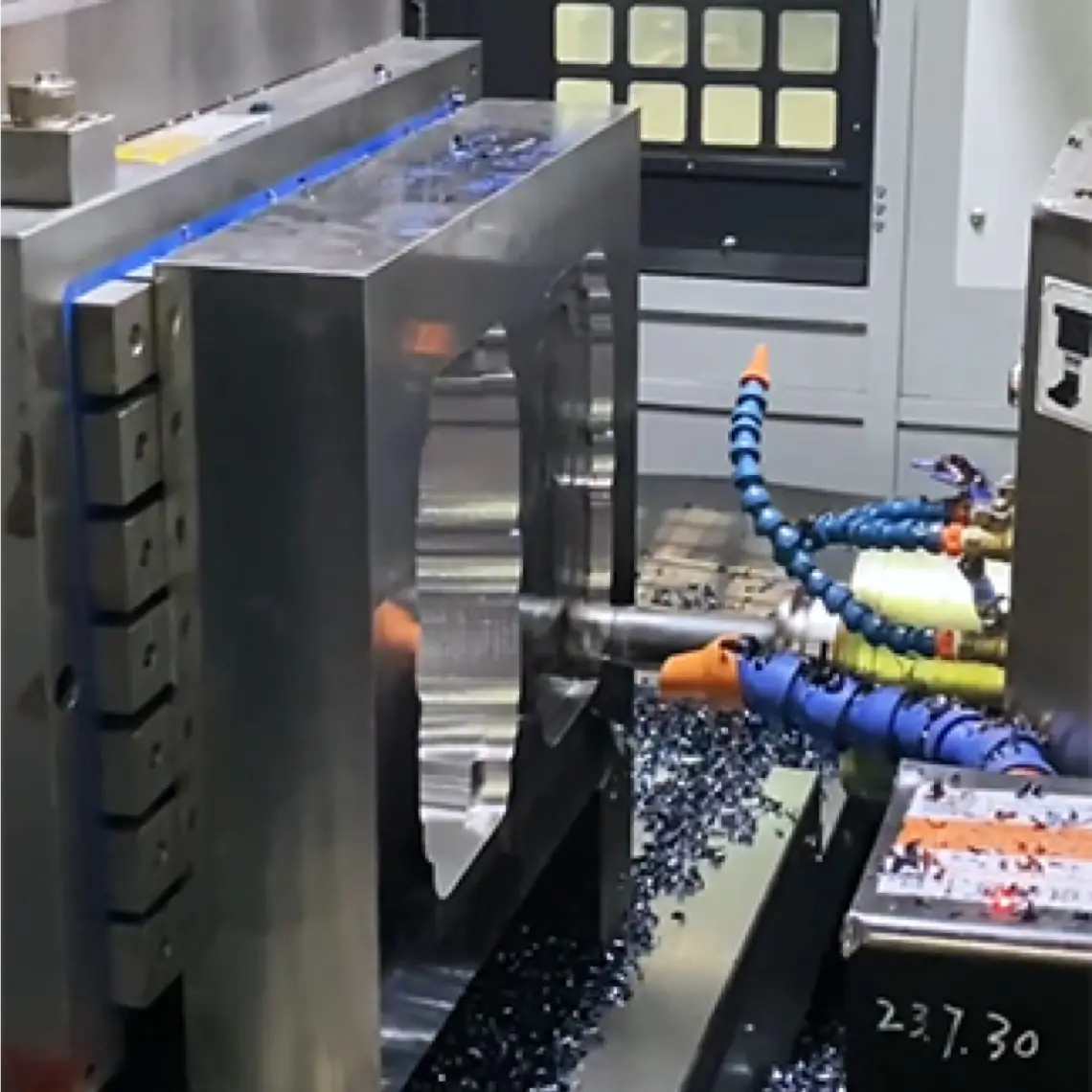
The spindle interface serves as the primary connection point for transmitting power to the workpiece. Engineers choose HSK-A100 tapers for high-speed applications because the dual-contact interface reduces tool deflection during heavy cuts.
| Specification | Typical High-End Value |
| Spindle Taper | HSK-A100 / BT-50 |
| Max Spindle Speed | 12,000 RPM |
| Motor Power (S6-40%) | 37 kW |
| Peak Torque | 350 Nm @ 800 RPM |
Because the HSK-A100 taper establishes a rigid connection, vibration levels stay below 0.5 mm/s during roughing operations. This rigidity influences the choice of bearing arrangements, which leads into motion control requirements.
Ceramic hybrid bearings allow for higher rotational speeds while maintaining thermal stability. These bearing systems operate with 20% less friction than traditional steel bearings, extending the service life of the spindle assembly in 24-hour operation cycles.
The reduction in friction heat allows motion systems to maintain higher acceleration rates without distorting the frame. Linear guides incorporate roller bearings rather than ball bearings to support higher loads during rapid axis movements.
Engineers specify roller guides to achieve acceleration rates of 1.2g, which minimizes the non-cutting time between features. A survey of 200 production facilities in 2025 indicated that machines with 1.2g acceleration reduce total cycle time by 15% compared to older 0.8g units.
Faster axis movements produce heat that requires compensation, which brings attention to the pallet and workholding setup. Pallets must index with extreme precision to ensure parts align with the spindle axis consistently.
Rotary tables provide 0.001-degree indexing resolution. Mechanical engagement systems lock the table in position using curvic couplings to ensure repeatability within 2 arc-seconds over 50,000 cycles.
Curvic couplings ensure the pallet stays stationary during high-torque milling, while the pallet changer mechanism facilitates fast load times. Standard swap times for a 630mm pallet measure under 10 seconds.
This rapid swap time keeps the spindle running, which necessitates a flow of coolant to manage chip accumulation. High-pressure through-spindle coolant systems deliver fluid directly at the tool tip to prevent chip recutting.
Pressure settings for modern pumps reach 70 bar, forcing chips out of deep holes instantly. Studies involving 500 machining tests show that 70 bar coolant pressure extends tool insert life by 30% compared to 20 bar systems.
Maintaining 70 bar pressure requires robust pumps and filtration systems that keep coolant clean. The coolant system connects to the tool magazine, where the machine stores dozens of cutting tools for varied operations.
Automatic tool changers require a capacity of at least 60 tools to handle complex engine blocks or aerospace components. Tool change times measure 2.5 seconds from chip to chip, reducing the time spent waiting for the next operation.
Magazines often include a servo-driven arm that moves tools in a linear path to the spindle. This path minimizes movement distance, ensuring the machine maintains a tool change reliability rate of 99.9% over 100,000 changes.
High reliability in the magazine allows for lights-out manufacturing, which requires strict thermal management of the machine frame. Manufacturers use sensors to monitor the temperature of the casting and adjust axis positions to compensate for expansion.
Thermal displacement remains under 5 microns over an 8-hour shift in environments with 20 degrees Celsius ambient temperature fluctuations. Sensors monitor the spindle housing and the bed, sending data to the controller to adjust axis offsets automatically.
This compensation creates stable tolerances for parts that require high precision, such as hydraulic manifolds or transmission casings. Engineers select cast iron frames for their natural vibration dampening properties, which reach a density of 7,200 kg per cubic meter.
Cast iron frames absorb the energy from high-feed milling, which keeps the machine from oscillating. Vibration analysis confirms that heavy cast iron structures reduce the amplitude of chatter by 40% when compared to steel-weldment frames of the same size.
The dampening characteristics of the frame support the entire assembly, allowing the machine to operate with high feed rates. Feeds reach 20 meters per minute in hard materials, while rapid movements cover 60 meters per minute in empty space.
Data from 150 production runs confirms that these feed rates achieve surface finishes of 0.8 Ra on aluminum alloys. Maintaining these finishes requires a stable bed, which connects back to the foundation requirements.
Engineers recommend a reinforced concrete floor with a minimum thickness of 300mm to support the mass of the machine and the cutting forces. This solid foundation prevents external vibrations from affecting the workpiece surface during finishing passes.
The combination of a rigid cast iron frame, high-pressure coolant, and fast pallet changes allows manufacturers to reach high output targets. Modern production lines utilize these specifications to maintain continuous operation across multiple shifts.